2026. május 20., szerda
Bernát, Felícia névnapja
Bernát, Felícia névnapja
Many women appear successful, strong, and composed on the outside, while inside they experience fatigue, overwhelm, or emotional emptiness. The central message of the video explores this inner contradiction: how a woman can lose connection with herself, her body, her femininity, and her own desires while doing everything she can to perform well at work, in her family, and in her relationships.

The modern woman often tries to meet professional, family, and relationship expectations all at once. She has to be strong, perform well, and take care of others, while her own needs are pushed into the background. In the long run, this can lead to burnout, inner tension, sleep problems, loss of self-confidence, and relationship blocks.
One of the important ideas in the video is that the problem is not simply a “lack of femininity.” Deeper causes often include a lack of self-awareness, wounded self-esteem, the need to please others, difficulty setting boundaries, old family patterns, and inner beliefs that quietly guide our decisions without us even noticing.
Femininity is not only about outward appearance, style, or a role within a relationship. It is much more of an inner state, one that can appear in a stable way only when a person knows her own strengths, weaknesses, desires, fears, and boundaries.
From a professional perspective connected to the video, the first step toward real change is for a woman to recognize which patterns are holding her back from a happier, freer, and more authentic life. A moment of inspiration is not enough for this. Practical self-awareness work, consistency, and in many cases professional support are also needed.
Many women feel disconnected from their femininity because they find it difficult to connect with their own body or outward appearance. Body image, clothing, hairstyle, posture, makeup, or even a subtle change in style can strongly influence how we see ourselves.
A tasteful, personalized transformation is not a superficial tool; it can also be a confidence-building experience. When someone is able to see on the outside the value she wants to strengthen on the inside, it can often become an important turning point in the development of self-image and self-esteem.
The video places strong emphasis on love, the connection between men and women, and the fact that many successful women still feel lonely in their private lives. This is an important topic, but from a professional point of view, it is worth approaching it with nuance.
A relationship block is not caused solely by someone “not being feminine enough.” Previous disappointments, low self-worth, attachment patterns, distrust, communication difficulties, lack of boundaries, or repeatedly choosing a similar type of partner can all play a role.
For this reason, relationship development requires not only work on femininity, but also self-awareness, emotional awareness, communication skills, and realistic goals.
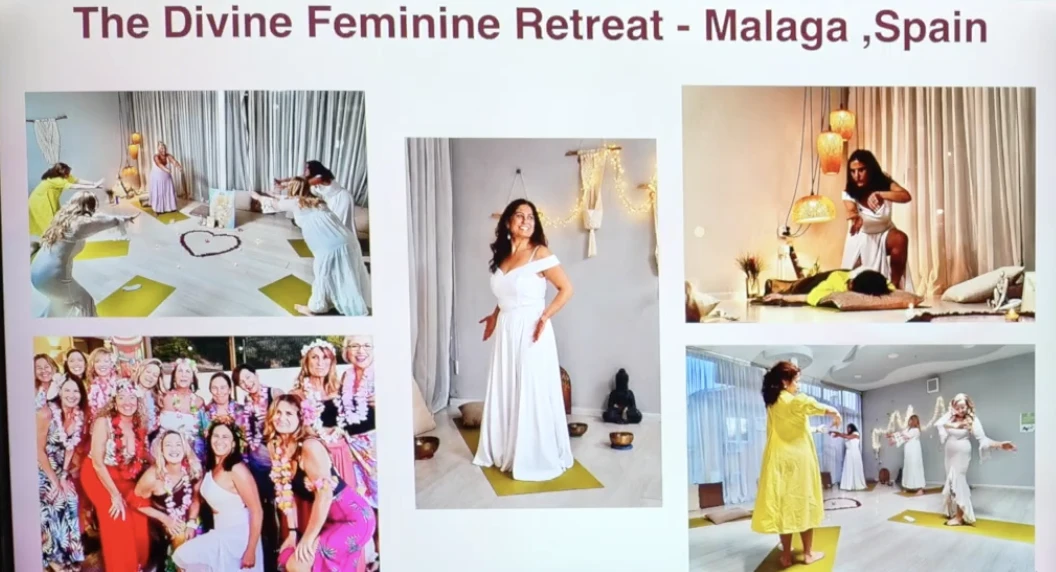
A women’s self-development or femininity-development program can be truly strong when it clearly separates spiritual self-development, coaching, and therapeutic support. It is important to state that a retreat or self-awareness program does not replace the work of a psychologist, psychiatrist, psychotherapist, or trauma-processing specialist.
A professionally credible approach may include a personal consultation, a self-awareness workbook, daily exercises, goal-setting tasks, a self-reflection journal, and a clear explanation of who the program is recommended for and who it is not recommended for.

Real development requires time, practice, and consistent inner work. An inspiring presentation or retreat can start the process, but lasting change is built through conscious work in everyday life.
The most important value of the video is that it highlights a problem that affects many women: many lose connection with themselves while trying to remain strong, successful, resilient, and lovable. Reconnecting with femininity can be an important path, but it becomes a truly deep and credible process when it happens together with conscious work on self-awareness, self-image, self-esteem, body image, and relationship patterns.
The real question, therefore, is not only how someone can become more feminine, but also how she can reconnect with her own inner truth, desires, boundaries, and with a life in which she does not merely perform, but is truly present.